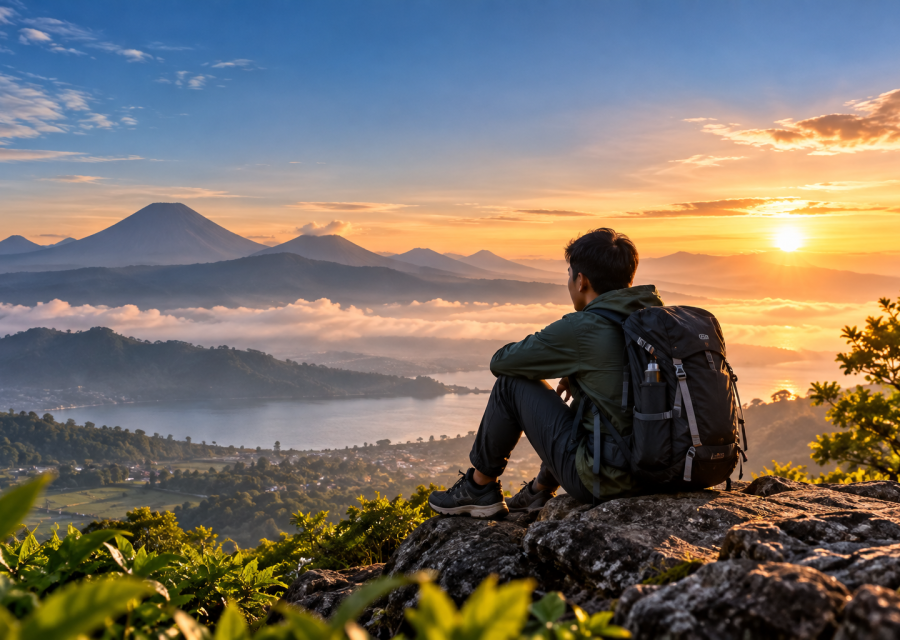
Mountain Expedition
A mentored high-terrain journey for experienced members and future leaders.
- Duration
- 3–7 days
- Distance
- 25–60 km
- Level
- Challenging
No results found. Try a different word, or browse Explore, Training or Learn.
Explore
Rock climbing is a conversation between movement and trust. Learn to move well, belay safely and look after your partner.
Introduction
Rock climbing combines physical movement, problem solving and trust. At its core it is a safety system: climber, rope, belayer and anchors working together.
We teach climbing from the fundamentals up, always emphasising safe systems and communication before difficulty. You will learn to climb confidently and to look after a partner.

Who is it for?
Climbing welcomes anyone willing to learn safe systems, regardless of strength.
Benefits
Climbing builds body and mind together.
Develop full-body strength alongside precise, thoughtful movement.
Climbing is a partnership. Good systems build genuine trust.
Every route is a puzzle that rewards calm thinking.
Learn rigour and check habits that transfer far beyond climbing.
Skill requirements
Climbing skills are layered so safety always comes before difficulty.
Training pathway
Climbing progresses through the Track Twenty Six pathway with a strong safety spine.
First climbs, equipment and safe movement in supervised sessions.
Learn belaying, knots and solid safety habits.
Climb outdoors with mentoring and stronger technique.
Take on multi-pitch and more demanding routes with a team.
Lead climbs and instruct others safely.
Equipment
Climbing equipment is safety equipment. Fit, condition and checking matter.
Safety
Safe systems, check habits and clear communication are non-negotiable in climbing.

Recommended preparation
Related training
Build the skills that make this activity safer, smoother and more rewarding.
Related adventures
Program frameworks that apply what you have learned.
A mentored high-terrain journey for experienced members and future leaders.
A supervised climbing day focused on skills, systems and trust.

A long-format team journey that applies the full learning pathway.
FAQ
Yes, beginners start with supervised sessions focused on safety and basic movement.
Personal items like shoes and harness are useful, but shared equipment is typically available for training.
Technique matters more than raw strength. Good movement makes climbing far less tiring.
With proper systems, checks and supervision, climbing risk is managed carefully. Safety skills are taught from day one.
Yes. Climbing skills help with mountaineering and exposed terrain, and build confidence generally.
Your next step
Learn the skills. Find your people. Explore the outdoors with Track Twenty Six.